
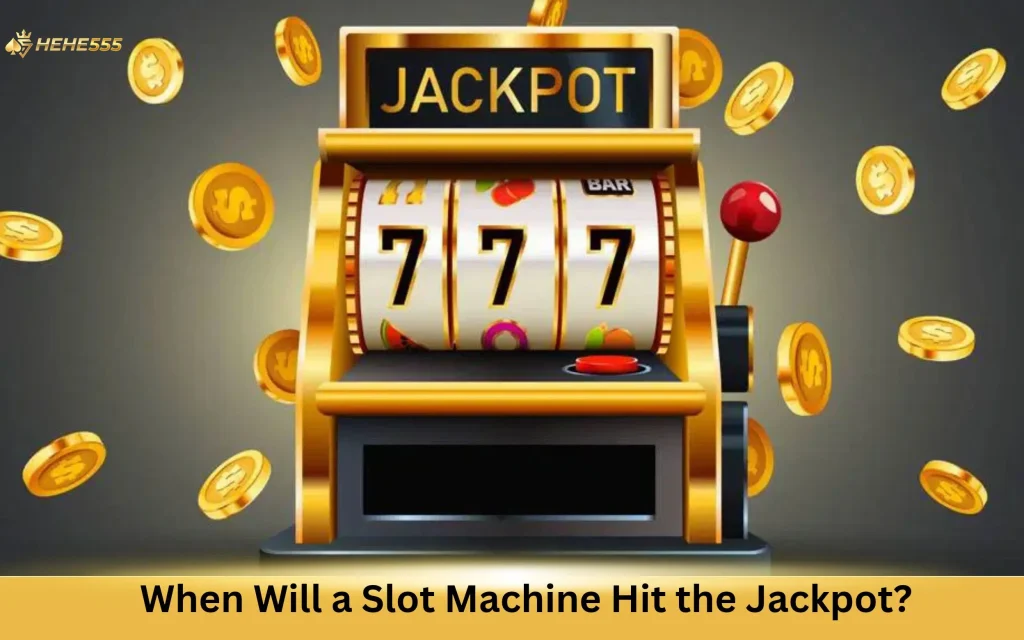
You cannot reliably predict when a standard slot machine will hit the jackpot. Regulated random-number-generator (RNG) games produce unpredictable results, so previous losses, near misses, and payout streaks do not reveal the next winning spin. Some jackpots follow special rules, including must-hit-by limits, but those features do not provide a universal way to predict the exact result.
A slot machine can award a jackpot after a few spins or go through a long stretch without one. That uncertainty often leads to questions about whether a machine is getting closer to a big payout.
The answer depends partly on the jackpot mechanism. Understanding the difference between random outcomes, progressive prizes, and special jackpot triggers helps explain why popular prediction methods are unreliable.
What Actually Triggers a Slot Machine Jackpot?
A slot jackpot is awarded when the conditions defined by the game’s software and rules are met.
In most modern digital slots, an RNG generates values that the software translates into game outcomes. Those outcomes determine the symbols, bonus features, and qualifying prize combinations shown on the screen.
A jackpot may be triggered by:
- A particular symbol combination appearing on the reels.
- A qualifying result during a bonus round.
- A randomly selected jackpot event.
- A special trigger defined in the game’s rules.
Not every slot uses the same system.
Importantly, a standard RNG does not track previous losses to decide that a jackpot is overdue. Under technical standards for random game outcomes, regulated games must produce unpredictable results, meaning previous spins cannot reliably indicate when the next jackpot will occur.
For a broader explanation of the technology behind digital games, see how online casinos work.
Do All Slot Jackpots Work the Same Way?
No. Jackpot mechanics vary, and understanding their differences is more useful than searching for a supposed winning pattern.
Fixed Jackpots
A fixed jackpot awards a predetermined prize when its qualifying conditions are met.
The prize amount stays the same, although the outcome remains uncertain. Seeing several losing spins does not establish that the next one will trigger the jackpot.
Progressive Jackpots
A progressive slot jackpot generally grows as qualifying wagers contribute to its prize pool.
Some progressive jackpots are linked across multiple machines or games. Others operate within a single game.
A growing prize can attract attention, but its size alone does not establish when it will be awarded. The triggering mechanism still depends on the specific rules.
Must-Hit-By Jackpots
A must-hit-by jackpot has an advertised upper limit that the jackpot must be awarded by, according to its defined mechanism.
For example, a hypothetical jackpot might have a stated range between 10,000 and 15,000 units. A hidden threshold within that range could determine when it triggers.
This differs from an ordinary progressive jackpot, which has no guaranteed upper boundary.
However, the displayed amount does not necessarily reveal the hidden threshold or the exact spin that will trigger the prize. Rules and probability distributions differ between games.
Are There Signs a Slot Machine Is About to Hit?
Players often interpret certain events as signs a slot machine is about to hit the jackpot.
Common examples include repeated near misses, several small wins, a long losing streak, or a machine that recently awarded a large prize.
None of these observations reliably predicts the next independent RNG outcome.
A machine that has not paid a jackpot for hours is not automatically closer to winning. Similarly, a recent jackpot does not prove another one cannot occur soon.
This misunderstanding is closely related to the gambler’s fallacy: the belief that past random results must influence future independent outcomes.
A visible sequence can describe what happened. It cannot, by itself, establish what will happen next.
Does a Growing Jackpot Meter Mean a Win Is Near?
A jackpot meter shows information about the prize, but its meaning depends on the game.
For an ordinary progressive jackpot, an increasing meter generally indicates a growing prize pool. It is not a countdown to the next win.
A must-hit-by jackpot is different because its rules include a defined upper boundary.
Even then, a player cannot assume the next spin will win simply because the amount approaches that limit. The trigger mechanism, eligibility requirements, and remaining range all matter.
Explore the online slot games featured on Hehe555 to learn about different jackpot features, game mechanics, and payout rules. Remember, a growing jackpot amount does not mean a win is imminent.
Can RTP Tell You When a Jackpot Will Hit?
Return to Player (RTP) describes a game’s theoretical long-term payout percentage. It does not tell you when a jackpot will occur.
Consider a hypothetical slot with a 96% RTP.
Across a very large number of wagers, its mathematical model expects an average return of approximately 96 units for every 100 units wagered. That does not mean each person receives 96 units back, or that a jackpot must arrive after a certain amount has been spent.
Three different measurements are often confused:
RTP: The theoretical share of wagers returned as prizes over the long term.
Hit frequency: How often a game produces a winning outcome, which may be a small prize rather than a jackpot.
Jackpot probability: The likelihood of triggering a particular jackpot under its defined conditions.
A slot may produce frequent small wins while awarding its largest prize rarely. RTP alone cannot reveal that distribution.
Can a Slot Machine Hit Two Jackpots in a Row?
Yes, consecutive jackpots may be possible in games where each qualifying spin has an independent chance of triggering the prize.
Winning once does not automatically prevent another winning result.
However, some jackpot systems reset their prize pool after a win or require specific features to become available again. Their rules can affect whether another immediate jackpot is possible.
That is why a statement about one jackpot mechanism should not be treated as a rule for every slot machine.
What Should You Check in Slot Jackpot Rules?
A jackpot’s advertised amount tells only part of the story.
Its published rules should explain the conditions under which the prize can be awarded.
The most useful details include the jackpot type, qualifying symbols or events, whether the prize is fixed or progressive, any eligibility requirements, and whether an upper payout threshold exists.
Some games also offer free spins during bonus rounds, but these do not always qualify for jackpot prizes. Understanding how free spins work in online slot games can help clarify the difference between bonus features and jackpot eligibility.
Pay particular attention to the distinction between a jackpot amount and a jackpot probability.
A large displayed prize does not automatically mean a higher chance of winning. Similarly, a feature described as “random” should not be assumed to follow a predictable payout schedule.
Independent testing and transparent rules can help establish whether software behaves as specified. They do not make future outcomes predictable.
Are Online and Physical Slot Jackpots Different?
Physical and online slots may look different, but both can use RNG-based systems to determine results.
Online games display digital reels, while physical machines use cabinets and dedicated hardware. The underlying probability model depends on the individual game.
Some systems also use persistent counters, bonus states, or progressive jackpot mechanisms.
These features must be evaluated according to their published rules, not assumptions about whether a machine is online or located in a physical venue.
Legal Considerations in Bangladesh
Bangladesh’s Gambling Prevention Act, 2026, effective from 1 July 2026, addresses gambling, online gambling, betting, and related activities.
The law prohibits online gambling and provides penalties for specified offences.
Anyone researching online slot games in Bangladesh should understand these restrictions. Access to a gambling website does not establish that real-money gambling is lawful.
Final Thoughts
There is no reliable way to know exactly when a standard RNG slot machine will hit the jackpot.
Past results, near misses, playing times, and long losing streaks do not reveal the next outcome. Progressive and must-hit-by jackpots may have additional mechanisms, but those must be understood individually.
The meaningful distinction is between information a game actually discloses and predictions that are not supported by its rules.
Frequently Asked Questions
How often do slot machines hit jackpots?
There is no universal frequency. Jackpot probability depends on the game’s design, qualifying conditions, and mathematical model. Ordinary prize frequency should not be confused with jackpot frequency.
Are slot machines programmed to pay at certain times?
Properly regulated independent RNG slots do not follow a scheduled payout clock. Certain special features may have defined conditions, but these are not evidence of a universal winning time.
Can an app or AI tool predict when a slot jackpot will hit?
A tool analysing past outcomes cannot reliably forecast future independent RNG results. Claims of guaranteed jackpot prediction should be treated with scepticism.
Does a larger bet increase the chance of winning a jackpot?
It depends on the game’s rules. Some jackpots have specific eligibility requirements, but a higher wager does not universally improve jackpot probability or guarantee a win.
Disclaimer: This content is for educational purposes only and does not provide gambling, financial, or legal advice. Online gambling is prohibited under applicable law in Bangladesh.